Auction Property Viewing: Essential Tips for Successful Inspections

Viewing auction properties effectively is a critical skill for successful property investment. Unlike traditional property purchases, auction properties often offer limited viewing opportunities and come with no guarantees. This comprehensive guide provides essential tips for conducting thorough property inspections before auction day, helping you identify potential issues, estimate renovation costs, and make informed bidding decisions.
Understanding the Auction Property Viewing Context
Auction property viewings differ from standard property viewings in several important ways:
- Limited opportunities: Often only 1-2 viewing slots available before auction
- Group viewings: Multiple potential buyers viewing simultaneously
- Time constraints: Typically 15-30 minutes per viewing
- Condition variation: Properties range from ready-to-move-in to severe disrepair
- No post-survey negotiation: Once the hammer falls, you're committed to the purchase
These constraints make it essential to approach auction property viewings with a systematic, thorough methodology.
Preparation Before the Viewing
Effective preparation maximizes the value of your limited viewing time:
Research the Property
Before attending the viewing, gather as much information as possible:
- Legal pack review: Examine the legal documents for title issues, restrictive covenants, or unusual conditions
- Local area research: Check local amenities, transport links, schools, and crime statistics
- Planning history: Review any planning applications or restrictions affecting the property
- Flood risk assessment: Check Environment Agency flood risk maps
- Historical sales data: Research previous sale prices for the property and comparable properties in the area
Essential Tools to Bring
Equip yourself with these tools for a thorough inspection:
- Torch/flashlight: For examining dark areas, roof spaces, and under-floor areas
- Moisture meter: To detect damp that may not be visually apparent
- Tape measure: For measuring room dimensions and potential renovation spaces
- Camera: To document issues and features for later reference
- Inspection checklist: A systematic list of items to check (see our comprehensive checklist below)
- Notebook and pen: For recording observations and questions
- Binoculars: For examining roof conditions and high-level features
- Spirit level app: For checking if floors and walls are level
Bring Professionals When Possible
For higher-value properties or those with obvious issues, consider bringing:
- Builder or contractor: To provide renovation cost estimates
- Surveyor: For professional assessment of structural issues
- Architect: If considering significant remodeling or extension
- Electrician/plumber: For specialist assessment of these systems
Comprehensive Viewing Checklist
Use this detailed checklist to ensure you don't miss critical aspects during your viewing:
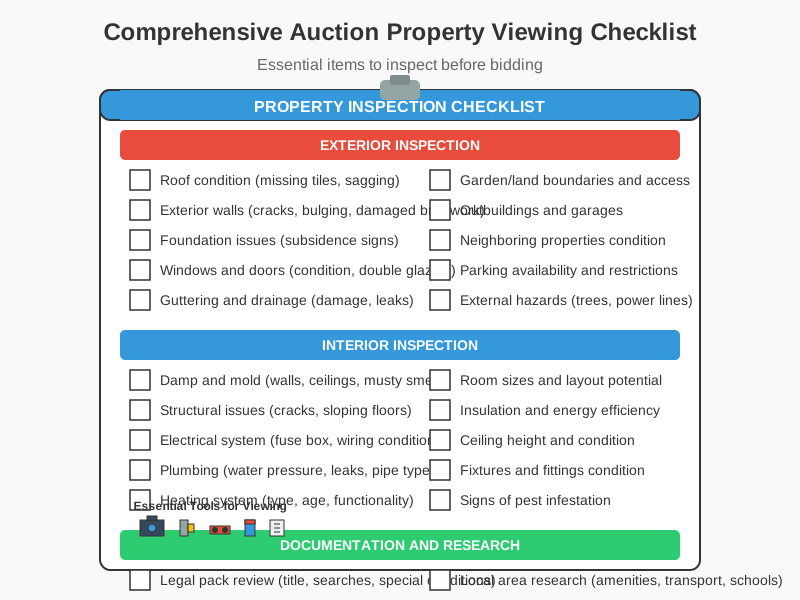
Figure 1: Comprehensive auction property viewing checklist
Exterior Inspection Techniques
Start your inspection from the outside, working methodically:
Roof Assessment
The roof is one of the most expensive elements to repair:
- Missing or damaged tiles/slates: Look for gaps or slipped tiles
- Sagging roofline: Indicates potential structural issues
- Chimney condition: Check for cracked or leaning chimneys
- Flat roof coverings: Look for cracks, blistering, or pooling water
- Guttering and downpipes: Check for damage, leaks, or poor alignment
External Walls
Examine all external walls for:
- Cracks: Particularly diagonal cracks wider than 3mm
- Bulging or leaning: Signs of potential structural movement
- Damaged brickwork or rendering: Look for crumbling mortar or rendering
- Damp patches: Indicating water ingress
- Previous repairs: Different colored mortar or bricks may indicate past issues
Foundation Clues
Look for signs of foundation problems:
- Cracks in bay windows: Often the first area to show subsidence
- Doors and windows not sitting square: Indicating structural movement
- Gaps between extensions and main building: Suggesting differential settlement
- Trees close to the property: Potential cause of subsidence in clay soils
Garden and Boundaries
Don't overlook the land that comes with the property:
- Boundary definition: Check fences, walls, and hedges against the title plan
- Japanese knotweed: Look for this invasive plant that can affect mortgage availability
- Drainage issues: Signs of waterlogging or poor drainage
- Access rights: Confirm access routes and any shared driveways
- Outbuildings: Assess condition and potential of garages, sheds, etc.
Interior Inspection Strategies
Once inside, be methodical and thorough:
Structural Elements
Check for signs of structural issues:
- Cracks in walls and ceilings: Particularly those wider than 3mm
- Sloping floors: Use a marble or spirit level app to check
- Door frames not square: Doors that stick or won't close properly
- Bouncy floors: May indicate joist problems
- Loft space: Examine roof timbers for damage or sagging
Damp Detection
Damp is a common issue in auction properties:
- Visual signs: Staining, peeling wallpaper, flaking paint
- Musty smell: Indicates hidden damp or mold
- Moisture meter readings: Use on lower walls, particularly external ones
- Salt deposits: White powder on walls (efflorescence) indicates rising damp
- Recently painted areas: May be concealing damp issues
Services Assessment
Evaluate the condition of essential services:
- Electrical system: Check the consumer unit age and condition, wiring type visible in loft
- Plumbing: Test water pressure, look for lead pipes, check for leaks under sinks
- Heating system: Note the boiler type, age, and radiator condition
- Drainage: Flush toilets, run taps, look for slow drainage
- Gas supply: Note meter location and any unusual smells
Room-by-Room Approach
Systematically assess each room:
- Measure dimensions: For furniture planning and valuation purposes
- Check windows and doors: Operation, glazing condition, security
- Floor coverings: Lift corners of carpets if possible to check floorboards
- Ceiling condition: Look for water stains, cracks, or artex (potential asbestos)
- Built-in features: Assess condition of fitted wardrobes, kitchen units, etc.
Common Defects to Look For
Be particularly vigilant for these common and potentially costly issues:
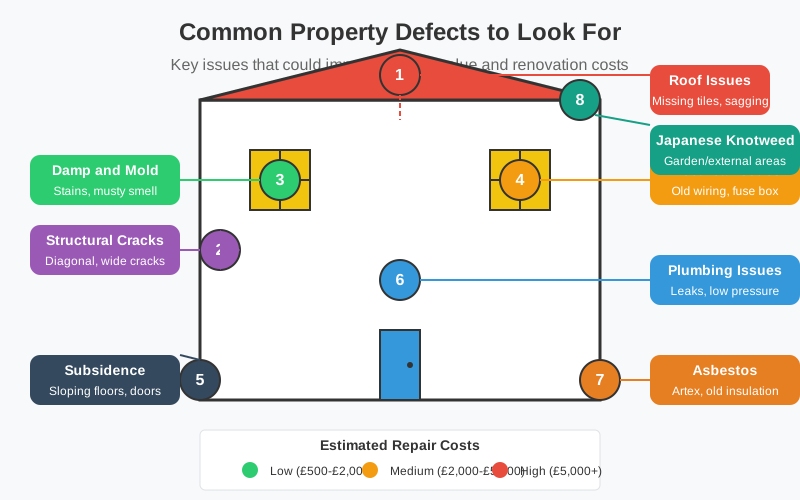
Figure 2: Common property defects and their typical locations
Estimating Renovation Costs
Accurate cost estimation is crucial for determining your maximum bid:
Major Structural Works
Budget guidelines for significant structural issues:
- Roof replacement: £5,000-£12,000 for a typical three-bedroom house
- Subsidence remediation: £10,000-£50,000 depending on severity
- Damp proofing: £2,000-£6,000 for a typical three-bedroom house
- Rewiring: £3,000-£5,000 for a complete rewire
- New central heating system: £4,000-£6,000 including boiler and radiators
Cosmetic Renovations
Budget guidelines for cosmetic improvements:
- Kitchen renovation: £5,000-£20,000 depending on specification
- Bathroom renovation: £3,000-£10,000 depending on specification
- Plastering: £20-£30 per square meter
- Painting and decorating: £2,000-£4,000 for a three-bedroom house
- Flooring: £25-£100 per square meter depending on material
Contingency Planning
Always include a contingency in your calculations:
- Cosmetic renovations: Add 10-15% contingency
- Structural renovations: Add 20-30% contingency
- Period properties: Add 25-40% contingency
- Properties with limited inspection access: Add 30-50% contingency
Red Flags That Should Make You Reconsider
Some issues should make you think twice about proceeding:
- Severe structural movement: Wide cracks, severely sloping floors
- Evidence of subsidence without insurance: Check if the property is insurable
- Japanese knotweed near foundations: Expensive to treat and affects mortgageability
- Extensive dry rot: Can spread rapidly and is expensive to treat
- Concrete cancer: In concrete-framed buildings, indicated by spalling concrete
- Unclear boundaries or rights of way: Can lead to expensive legal disputes
- Unresolved planning enforcement issues: May require costly remediation
Post-Viewing Analysis
After the viewing, take time to analyze your findings:
Organize Your Notes and Photos
Create a systematic record of your observations:
- Categorize issues by severity and cost implications
- Match photos to specific issues noted
- Identify areas requiring specialist assessment
- List questions to research or ask the auctioneer
Calculate Your Maximum Bid
Determine your bidding ceiling using this formula:
- Estimate the property's value after renovation (ARV)
- Subtract all renovation costs (including contingency)
- Subtract purchase costs (auction fees, stamp duty, legal fees)
- Subtract your required profit margin
- The result is your maximum bid
Seek Professional Input
For properties with significant issues:
- Consider commissioning a survey before auction if time permits
- Consult with builders or specialists about specific concerns
- Discuss insurance implications with your insurance provider
- Check mortgage availability if not purchasing with cash
Case Study: Successful Auction Property Viewing
A recent example demonstrates the value of thorough inspection:
A Victorian terrace in Manchester was listed at auction with a guide price of £120,000. During the viewing, our investor noticed:
- Significant damp in the rear reception room (confirmed with moisture meter)
- Outdated electrical consumer unit with rubber-coated wiring visible in loft
- Sagging floor in the bathroom suggesting joist issues
- Single-glazed windows throughout requiring replacement
- Roof tiles in good condition but failing lead flashing around chimney
Based on these findings, renovation costs were estimated at £35,000 including contingency. With comparable properties in good condition selling for £180,000, the investor set a maximum bid of £130,000 (allowing for purchase costs and profit margin). The property was secured for £127,000 and following renovation sold for £185,000, delivering a healthy profit.
Conclusion
Effective property viewing is perhaps the most critical skill for successful auction property investment. By approaching viewings systematically, equipped with the right tools and knowledge, you can accurately assess properties, identify issues, estimate costs, and make informed bidding decisions.
Remember that auction properties often represent excellent value precisely because they require work or have issues that deter other buyers. The key is to identify these issues accurately, cost them realistically, and factor them into your bidding strategy.
With practice, you'll develop the confidence to spot both the red flags that signal "walk away" and the opportunities that others miss. This expertise will give you a significant competitive advantage in the auction property market.
Get every UK auction lot, every week
7,000+ live lots from 25+ auction houses: guide prices, yields, and investor angles in one filterable Excel report.
Need finance for a lot?
We are selecting a bridging partner for auction buyers. Leave your email and we will introduce you the moment it is live.
Monday auction briefing
New lots, guide-price cuts and market signals worth watching.
By joining, you ask us to send this property briefing. Unsubscribe any time. Privacy.