Auction Property Tax Considerations: A Comprehensive Guide
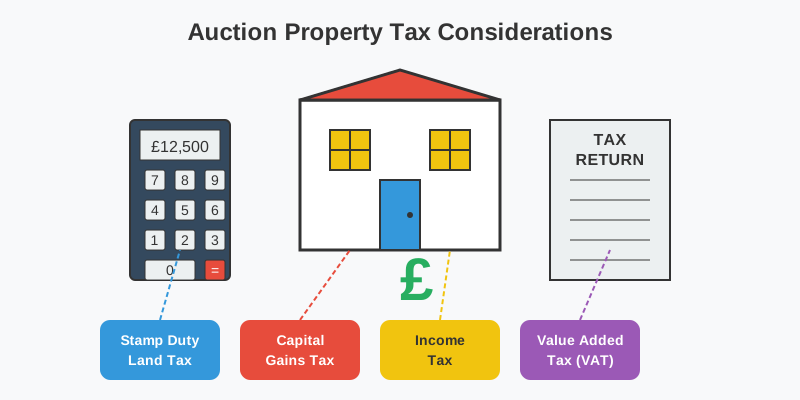
Tax considerations play a crucial role in auction property investment decisions, significantly impacting profitability and long-term returns. This comprehensive guide explores the key tax implications at each stage of the auction property journey—from purchase to ownership and eventual sale—helping investors optimize their tax position and avoid costly mistakes.
Understanding the Tax Landscape for Auction Properties
Auction properties are subject to the same tax rules as properties purchased through traditional methods, but several factors make tax planning particularly important:
- Discounted purchases: Properties bought below market value may have capital gains tax implications
- Renovation potential: Improvement costs affect both income tax and capital gains calculations
- Quick turnarounds: Flipping properties can trigger trading status with different tax treatment
- Multiple acquisitions: Building a portfolio requires consideration of ownership structures
Let's examine the key taxes that auction property investors need to consider at each stage of the investment lifecycle.
Taxes at the Point of Purchase
Stamp Duty Land Tax (SDLT)
Stamp Duty Land Tax is payable on property purchases above certain thresholds in England and Northern Ireland (with similar taxes in Scotland and Wales).
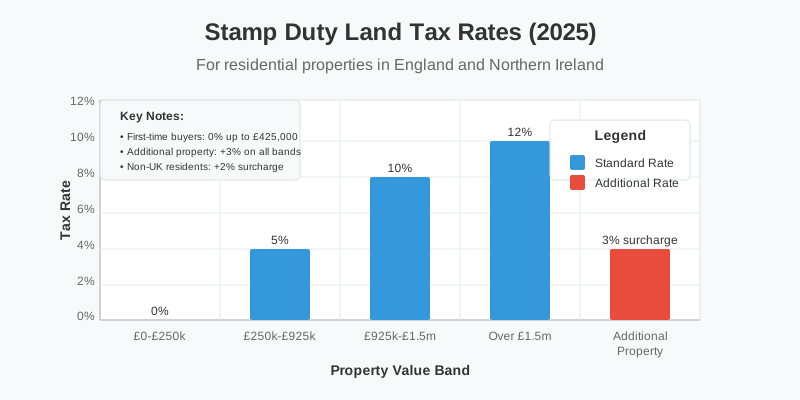
Figure 1: Current Stamp Duty Land Tax rates for residential properties
Key SDLT considerations for auction property buyers:
- Additional property surcharge: An extra 3% is payable if you already own another property
- Non-UK resident surcharge: An additional 2% for buyers not resident in the UK
- Mixed-use properties: Different rates apply for properties with both residential and commercial elements
- First-time buyer relief: No SDLT on properties up to £425,000 for first-time buyers
- Multiple dwellings relief: Potential relief when buying multiple properties in a single transaction
Value Added Tax (VAT)
Most residential property sales are exempt from VAT, but there are important exceptions:
- New builds: Subject to 0% VAT (zero-rated)
- Commercial properties: May be subject to 20% VAT unless the transfer of a going concern (TOGC) rules apply
- Converted properties: Reduced rate of 5% VAT may apply to certain conversion works
For commercial properties at auction, always check if the seller has opted to tax the property, as this could add 20% to your purchase price if you cannot recover the VAT.
Taxes During Ownership
Income Tax on Rental Income
Rental income from auction properties is taxable, with the rate depending on your overall income:
- Basic rate: 20% (for total income up to £50,270)
- Higher rate: 40% (for total income between £50,271 and £150,000)
- Additional rate: 45% (for total income above £150,000)
Allowable expenses that can be deducted include:
- General maintenance and repairs (but not improvements)
- Property management and letting agent fees
- Buildings and contents insurance
- Utility bills and council tax (if paid by the landlord)
- Accountancy and legal fees
Mortgage Interest Relief Restrictions
Since April 2020, landlords can no longer deduct mortgage interest as an expense. Instead, they receive a tax credit equal to 20% of the mortgage interest. This has significant implications for higher and additional rate taxpayers, who effectively receive relief at 20% rather than their marginal rate of 40% or 45%.
This restriction does not apply to limited companies, making corporate structures potentially more tax-efficient for highly leveraged portfolios.
Council Tax and Business Rates
Residential properties are subject to council tax, while commercial properties pay business rates. For mixed-use properties, separate assessments may apply to different parts of the property.
Empty properties may be eligible for discounts initially, but many local authorities charge premium rates for long-term empty properties (up to 300% in some cases).
Taxes on Sale or Disposal
Capital Gains Tax (CGT)
When selling an auction property that has increased in value, Capital Gains Tax may be payable on the profit:
- Basic rate taxpayers: 18% on residential property gains
- Higher and additional rate taxpayers: 28% on residential property gains
Each individual has an annual CGT allowance (£12,300 for the 2023/24 tax year), and various reliefs may apply:
- Principal Private Residence Relief: No CGT on your main home
- Lettings Relief: Limited relief if the property was your main home at some point
- Replacement of Business Assets Relief: Potential to defer CGT by reinvesting in another business property
Income Tax on Property Trading
If you're deemed to be "trading" in properties rather than investing (typically when buying, renovating, and selling quickly), profits may be subject to Income Tax rather than CGT. This determination depends on various factors including:
- Frequency of transactions
- Length of ownership
- Reason for acquisition
- Modifications made to the property
- How the purchase was financed
Trading profits are taxed at higher rates (up to 45%) than capital gains (maximum 28%), but allow for more extensive expense deductions.
Ownership Structures and Tax Efficiency
The ownership structure you choose for auction properties can significantly impact your tax position:
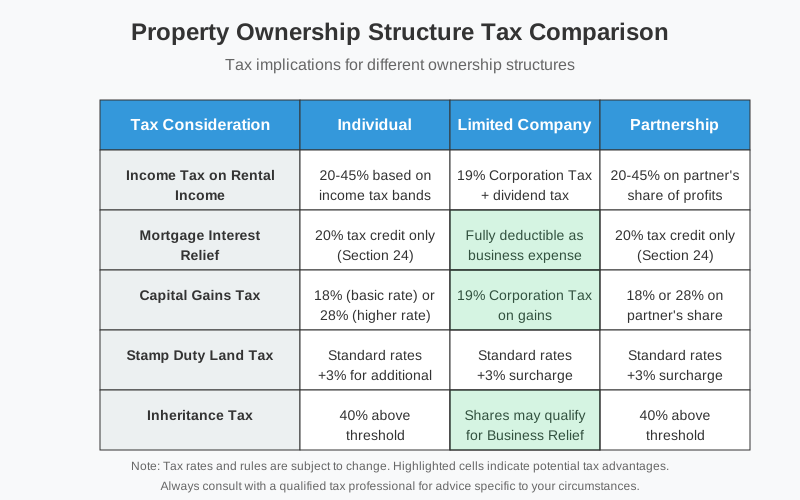
Figure 2: Tax implications of different property ownership structures
Individual Ownership
Pros:
- Simplicity and lower administrative costs
- Annual CGT allowance available
- Potential Principal Private Residence Relief
Cons:
- Higher income tax rates (up to 45%)
- Mortgage interest relief restrictions
- Limited ability to retain profits for reinvestment
Limited Company
Pros:
- Lower corporation tax rate (19%)
- Full deductibility of mortgage interest
- Flexibility to retain profits for reinvestment
- Potential inheritance tax advantages
Cons:
- Additional taxation on extracting profits (dividend tax)
- Higher mortgage interest rates typically
- Increased administrative burden and costs
- No CGT annual allowance
Partnership
Pros:
- Tax transparency (profits taxed at partners' individual rates)
- Flexibility in profit allocation
- Each partner retains CGT annual allowance
Cons:
- Joint and several liability
- Mortgage interest relief restrictions still apply
- Potential complications if partners disagree
Tax Planning Strategies for Auction Property Investors
Maximizing Deductible Expenses
Ensure you're claiming all legitimate expenses:
- Maintain detailed records of all property-related expenditure
- Consider timing of repairs and maintenance for optimal tax relief
- Review service charge breakdowns for deductible elements
- Claim for travel expenses related to property management
Strategic Use of Ownership Structures
Consider these approaches:
- Mixed portfolio: Hold some properties personally and others through a company
- Family partnerships: Share ownership with family members to utilize multiple tax allowances
- Pension fund investment: Self-Invested Personal Pensions (SIPPs) can purchase commercial property with significant tax advantages
Timing of Acquisitions and Disposals
Strategic timing can reduce tax liabilities:
- Consider spreading disposals across tax years to utilize multiple CGT allowances
- Time purchases to benefit from SDLT holidays or rate changes
- For couples, consider transferring assets between spouses before sale to utilize both CGT allowances
Common Tax Pitfalls in Auction Property Investment
Underestimating SDLT Liability
Many investors fail to account for the 3% surcharge on additional properties or misunderstand mixed-use property rules. Always calculate your SDLT liability before bidding to avoid unexpected costs.
Incorrect Treatment of Renovation Costs
The tax treatment of property expenditure depends on whether it's classified as:
- Revenue expenditure: Repairs and maintenance (deductible against rental income)
- Capital expenditure: Improvements and additions (added to the cost base for CGT calculations)
Misclassification can lead to lost tax relief or HMRC challenges.
Trading vs. Investment Status
The line between property investment and property trading can be blurry. If HMRC determines you're trading rather than investing, you could face:
- Higher tax rates (Income Tax vs. CGT)
- Potential National Insurance contributions
- Loss of certain reliefs and allowances
Document your investment intentions clearly and maintain consistent behavior to support your claimed status.
Overlooking VAT on Commercial Properties
VAT on commercial property purchases can add 20% to your costs. Always check if a property is VAT-opted and consider your ability to recover this VAT before bidding.
Case Study: Tax-Optimized Auction Property Investment
Consider this example of how strategic tax planning can enhance returns:
An investor identified a mixed-use property (commercial ground floor, two residential flats above) at auction with a guide price of £350,000. Their approach:
- Acquisition structure: Purchased the commercial element through their SIPP and the residential elements personally
- SDLT savings: By treating it as a mixed-use property, they paid SDLT at the lower non-residential rates
- Renovation strategy: Carefully documented all expenditure, distinguishing between repairs (deducted against rental income) and improvements (added to CGT base cost)
- Income tax efficiency: Commercial property rent received tax-free within the SIPP, while residential income was split with their spouse to utilize two personal allowances
- Exit strategy: After five years, they sold the residential elements, utilizing two CGT allowances, and retained the commercial element in the SIPP for retirement income
This structured approach saved approximately £32,000 in tax compared to a straightforward personal purchase of the entire property.
Working with Tax Professionals
Given the complexity of property taxation, working with specialists is often a worthwhile investment:
- Property tax accountants: Provide ongoing advice and ensure compliance
- Tax advisors: Help with strategic planning and structure optimization
- Property solicitors: Advise on SDLT and VAT implications during acquisition
The cost of professional advice is typically tax-deductible and often pays for itself through identified savings.
Conclusion
Tax considerations should be integrated into every stage of your auction property investment journey—from initial bidding strategy to ownership structure and eventual disposal. By understanding the tax implications of different approaches and planning accordingly, you can significantly enhance your after-tax returns.
Remember that tax rules change regularly, so staying informed and working with knowledgeable professionals is essential. While tax efficiency is important, it should support your broader investment strategy rather than driving it—the fundamental property metrics must still make sense.
With careful planning and proper advice, you can ensure that tax considerations enhance rather than hinder your auction property investment success.
Get every UK auction lot, every week
7,000+ live lots from 25+ auction houses: guide prices, yields, and investor angles in one filterable Excel report.
Need finance for a lot?
We are selecting a bridging partner for auction buyers. Leave your email and we will introduce you the moment it is live.
Monday auction briefing
New lots, guide-price cuts and market signals worth watching.
By joining, you ask us to send this property briefing. Unsubscribe any time. Privacy.