Auction Property Financing Options: A Comprehensive Guide
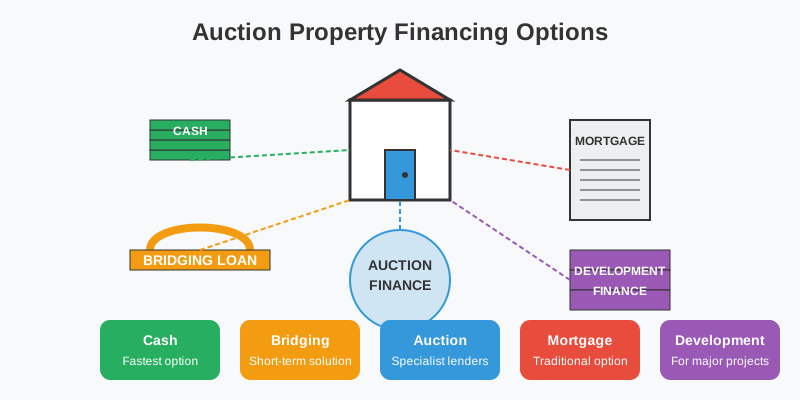
Financing is often the most challenging aspect of auction property investment. The unique nature of property auctions—with their rapid completion timeframes and properties in varying conditions—requires specialized financing approaches. This comprehensive guide explores the full spectrum of auction property financing options, helping you identify the most suitable solution for your investment strategy.
Understanding the Auction Financing Challenge
Property auctions present several distinct financing challenges compared to traditional property purchases:
- Rapid completion: Typically 28 days from auction to completion, versus 8-12 weeks for traditional purchases
- Non-refundable deposit: 10% deposit payable immediately upon winning the auction
- Property condition: Many auction properties are in poor condition or uninhabitable
- Limited due diligence: Less time for surveys, valuations, and legal checks
- Unconditional purchase: No "subject to finance" clauses—you must complete or lose your deposit
These factors necessitate specialized financing solutions that can accommodate both the speed requirements and the unique characteristics of auction properties.
Comparing Auction Property Financing Options
Let's examine the main financing options available for auction properties:
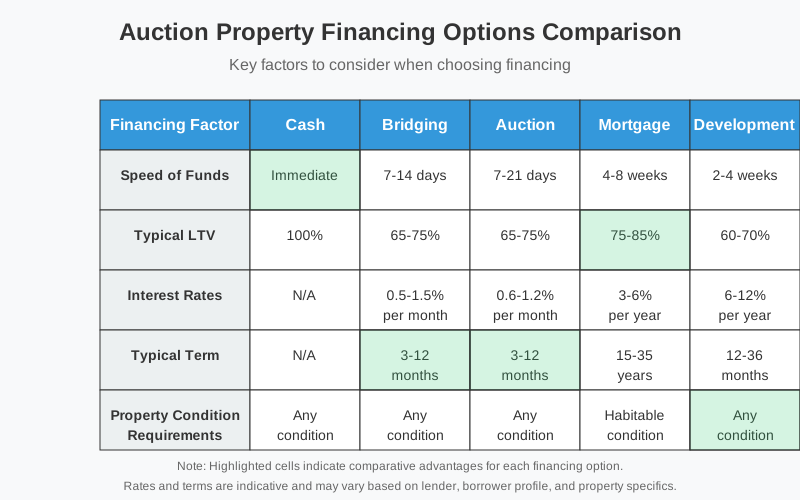
Figure 1: Comparison of auction property financing options
Cash Purchase
Cash remains the simplest and most straightforward option for auction property purchases.
How It Works
You pay the 10% deposit on auction day from readily available funds, then complete the remaining 90% from your cash reserves within the 28-day completion period.
Advantages
- Speed: No financing delays or approval processes
- Certainty: No risk of financing falling through
- Negotiating power: Potential for pre-auction deals with sellers who value certainty
- No property condition restrictions: Can purchase properties in any condition
- No financing costs: No interest payments or arrangement fees
Disadvantages
- Capital intensive: Requires substantial liquid assets
- Opportunity cost: Capital tied up in a single asset
- No leverage: Cannot amplify returns through borrowing
Best For
Cash purchases are ideal for:
- Investors with substantial liquid assets
- Properties requiring immediate action (e.g., severe disrepair)
- Situations where speed is critical to secure a bargain
- Properties unsuitable for traditional financing
Bridging Loans
Bridging loans are short-term financing solutions designed to "bridge" the gap until longer-term financing can be arranged or the property is sold.
How It Works
You secure a short-term loan (typically 3-12 months) against the auction property or another property you own. The loan is arranged before the auction and can be drawn down quickly after winning the bid.
Advantages
- Speed: Can be arranged in 7-14 days
- Flexibility: Works for properties in any condition
- No monthly payments: Interest can often be "rolled up" and paid at the end of the term
- Higher LTV: Typically 65-75% of the property value
- No minimum term: Can be repaid at any time (check for early repayment charges)
Disadvantages
- Cost: Higher interest rates (0.5-1.5% per month)
- Arrangement fees: Typically 1-2% of the loan amount
- Exit strategy required: Must have a clear plan to repay the loan
- Risk: Potential for repossession if exit strategy fails
Best For
Bridging loans are ideal for:
- Properties requiring renovation before traditional mortgage eligibility
- Investors planning to quickly sell the property (flip)
- Situations where speed is essential
- Experienced investors with clear exit strategies
Specialist Auction Finance
Specialist auction finance is a variant of bridging finance specifically designed for auction purchases.
How It Works
Similar to bridging loans, but with pre-arranged financing in place before the auction. The lender typically reviews the auction catalog, pre-approves properties of interest, and provides an agreement in principle.
Advantages
- Auction-specific: Designed for the unique requirements of auction purchases
- Pre-approval: Gives confidence to bid up to a specific amount
- Speed: Streamlined process for quick completion
- Flexibility: Works for properties in various conditions
Disadvantages
- Cost: Similar to bridging loans (0.6-1.2% per month)
- Limited lenders: Fewer providers than standard bridging
- Property-specific: Pre-approval is for specific properties only
Best For
Specialist auction finance is ideal for:
- First-time auction buyers seeking certainty
- Investors targeting specific properties in an auction catalog
- Those needing quick completion without cash reserves
Traditional Mortgages
Standard residential or buy-to-let mortgages can be used for auction properties, but with significant limitations.
How It Works
You apply for a mortgage as you would with any property purchase. However, you must ensure the mortgage can be approved and funds released within the 28-day completion period.
Advantages
- Cost: Lower interest rates (3-6% per annum)
- Long-term: Typically 15-35 years
- Higher LTV: Potentially 75-85% for residential properties
- Stability: Fixed or predictable monthly payments
Disadvantages
- Speed: Typically takes 4-8 weeks to arrange
- Property condition: Property must be habitable and mortgageable
- Valuation requirements: Must meet lender's criteria
- Risk: May not complete in time for auction deadlines
Best For
Traditional mortgages are suitable for:
- Habitable properties in good condition
- Situations where the seller may agree to a longer completion period
- Investors with alternative short-term funding to bridge the gap
- Buy-to-let investors purchasing ready-to-rent properties
Development Finance
Development finance is specialized lending for property development projects, from light refurbishments to ground-up construction.
How It Works
The lender provides funding for both the property purchase and the development costs. Funds are typically released in stages as the project progresses, based on architect or surveyor sign-off.
Advantages
- Combined funding: Covers both purchase and development costs
- Higher loan amounts: Typically 60-70% of Gross Development Value (GDV)
- Staged drawdown: Funds released as needed, reducing interest costs
- Specialized expertise: Lenders understand development risks and timelines
Disadvantages
- Cost: Higher interest rates (6-12% per annum)
- Complexity: Requires detailed development plans and costings
- Monitoring: Regular site inspections and progress reports
- Experience requirements: Lenders typically require previous development experience
Best For
Development finance is ideal for:
- Major renovation or conversion projects
- Properties requiring structural alterations
- Experienced developers with proven track records
- Projects with strong profit margins
Hybrid Financing Strategies
Many successful auction investors use combinations of financing methods to optimize their approach:
Cash Purchase with Refinance
Purchase with cash, then refinance with a mortgage once the property is renovated and mortgageable. This approach combines the speed and certainty of cash with the leverage benefits of mortgage financing.
Bridging to Mortgage
Use a bridging loan for the initial purchase and renovation, then refinance with a long-term mortgage once the property meets lender requirements. This approach is often called "bridge-to-let" when used for rental properties.
Development Finance to Sale or Refinance
Use development finance for the purchase and major works, then either sell the property or refinance with a long-term mortgage once completed.
Finding Your Optimal Financing Solution
The best financing approach depends on your specific circumstances, the property characteristics, and your investment strategy:

Figure 2: Decision tree for selecting your optimal financing solution
Practical Tips for Securing Auction Finance
Preparation Before the Auction
- Arrange financing first: Have funding in place before bidding
- Get an agreement in principle: For mortgages or bridging loans
- Review the legal pack: Identify any issues that might affect financing
- Set a maximum bid: Based on your financing capacity and property value
- Have a contingency plan: Alternative financing options if your first choice falls through
Working with Lenders
- Use specialist brokers: Those with auction experience understand the unique requirements
- Be transparent: Disclose all relevant information about the property and your plans
- Provide comprehensive documentation: Have all paperwork ready to expedite the process
- Highlight your experience: Previous successful projects can improve terms
- Demonstrate your exit strategy: Clear plans for repayment improve approval chances
Managing Financing Risks
- Build in contingency: Both in budget and timeline
- Have backup options: Alternative lenders or sources of funds
- Consider insurance: Protect against unforeseen issues during the project
- Monitor market conditions: Interest rate changes can affect refinancing options
- Stress-test your numbers: Ensure the project remains viable if costs increase or timelines extend
Case Study: Strategic Financing for an Auction Property
Consider this example of effective financing strategy for an auction property:
An investor identified a Victorian terrace house at auction with a guide price of £180,000. The property required significant renovation and was unmortgageable in its current state. Their approach:
Financing Strategy
- Pre-auction: Arranged a bridging loan facility for up to £250,000 (70% LTV)
- Purchase: Successfully bid £210,000, paid 10% deposit (£21,000) on auction day
- Bridging loan: Drew down £147,000 (70% of purchase price) to complete the purchase
- Personal funds: Contributed £42,000 to cover the remainder of the purchase price
- Renovation: Used £50,000 from personal savings for renovation works
- Exit strategy: After 4 months of renovation, the property was valued at £320,000
- Refinance: Secured a buy-to-let mortgage at 75% LTV (£240,000)
- Outcome: Repaid the bridging loan, recovered most of the personal funds invested, and retained a cash-flowing rental property with approximately £80,000 of equity
This approach combined the speed and flexibility of bridging finance with the long-term benefits of mortgage financing, while minimizing the amount of personal capital permanently tied up in the project.
Conclusion
Financing auction properties requires a strategic approach that balances speed, cost, flexibility, and risk. While cash offers the simplest solution, various financing options make auction properties accessible to investors with different resources and strategies.
The key to successful auction property financing lies in preparation—understanding the available options, arranging financing before bidding, and having contingency plans in place. By matching your financing approach to your investment strategy and the specific property characteristics, you can maximize your chances of auction success.
Remember that financing is not just about securing the initial purchase; it should be part of a comprehensive strategy that considers your long-term investment goals, exit plans, and risk management approach. With the right financing structure in place, auction properties can offer exceptional opportunities for property investors at all levels.
Get every UK auction lot, every week
7,000+ live lots from 25+ auction houses: guide prices, yields, and investor angles in one filterable Excel report.
Need finance for a lot?
We are selecting a bridging partner for auction buyers. Leave your email and we will introduce you the moment it is live.
Monday auction briefing
New lots, guide-price cuts and market signals worth watching.
By joining, you ask us to send this property briefing. Unsubscribe any time. Privacy.